Synchronized skating
The Power of
Moving Together.
Speed. Strength. Music. A team that moves as one. Synchronized skating brings the artistry of figure skating and the energy of a team sport onto the same ice.

The Haydenettes show the sport at its highest level. Your skater’s first steps begin with the fundamentals.
Figure skating, together
Every Skater Matters.
Every Movement Connects.
Synchronized skating is figure skating performed as a team. Skaters move together to music, creating formations and changing shapes with shared timing, spacing and control.
A line becomes a circle. A block opens into a new pattern. Each skater has a part in making the whole team move smoothly, and every teammate depends on the people beside them.
That connection is what makes synchro compelling to watch and rewarding to learn. Individual skill becomes something the team can create together.
A place to begin
Start With the Basics.
Discover What Comes Next.
The spectacular skills you see in an advanced performance grow from a foundation built over time. Skaters begin with the skills and team experience suited to their level.
For new skaters
Learn to Move With a Team.
Build balance, edges and turns. Learn simple formations, follow the music and get comfortable matching your teammates.
You do not need advanced lifts or fast intersections to begin. The first challenge is learning to skate together.
As skills develop
Add Speed, Precision and Challenge.
Stronger skating opens the door to more demanding footwork, complex formations and faster transitions.
Advanced teams develop elements such as group lifts at appropriate levels. The demands grow with skating ability and experience.
The right starting point is individual.
Team placement considers age, skating skills, experience and applicable test requirements. Talk with Hayden Synchro about where your skater can learn and grow.
Your guide from the stands
Once You See the Shapes,
You See the Sport.
Start by watching the formations change. These eight examples help you recognize what is happening on the ice; required elements vary by level and season.
Watch for: even spacing, matching turns and the moment the team changes shape together.
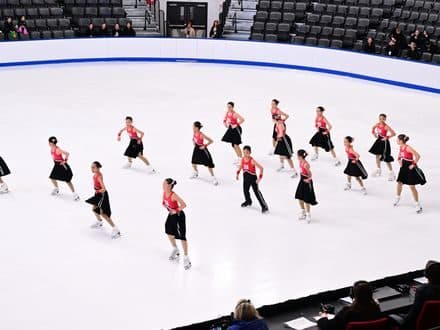
Block
Rows of skaters create a compact shape and travel together, keeping the lines and spacing even.
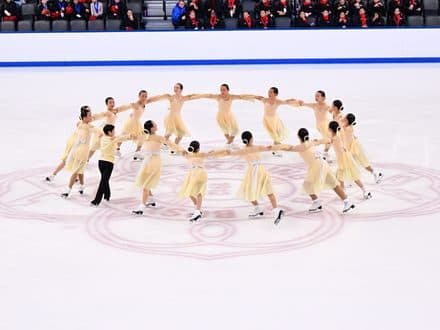
Circle
Skaters rotate around a shared center, keeping a consistent shape as the circle moves.
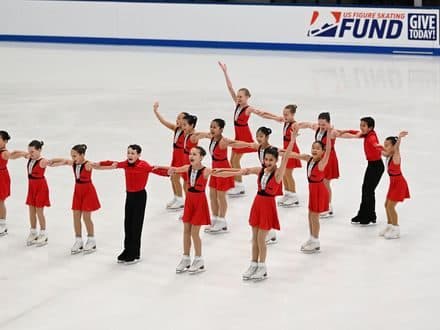
Line
A straight line travels across the ice. Watch how teammates match their timing and positions.
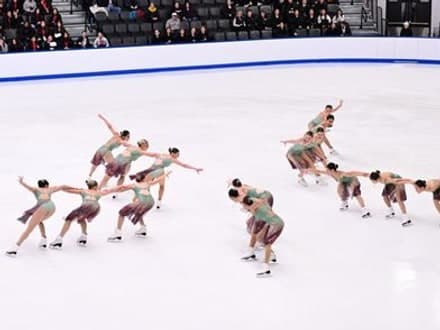
Wheel
Connected spokes rotate around a center. Outer skaters travel farther to keep the shape turning together.
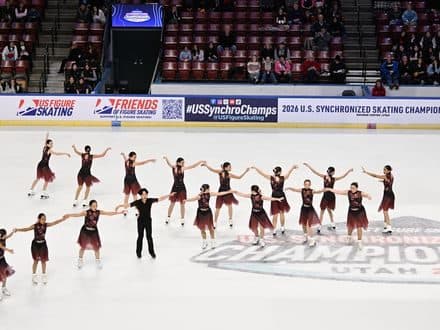
Intersection
Lines of skaters approach and pass through one another. Timing and awareness make room for everyone.
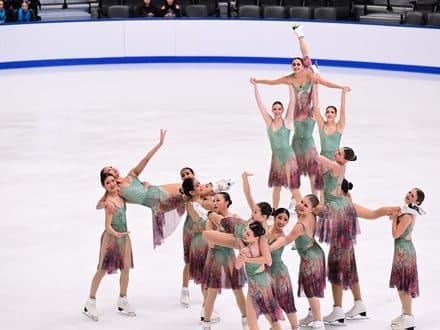
Lifts
At advanced levels, teammates lift and support skaters while the group glides or rotates.
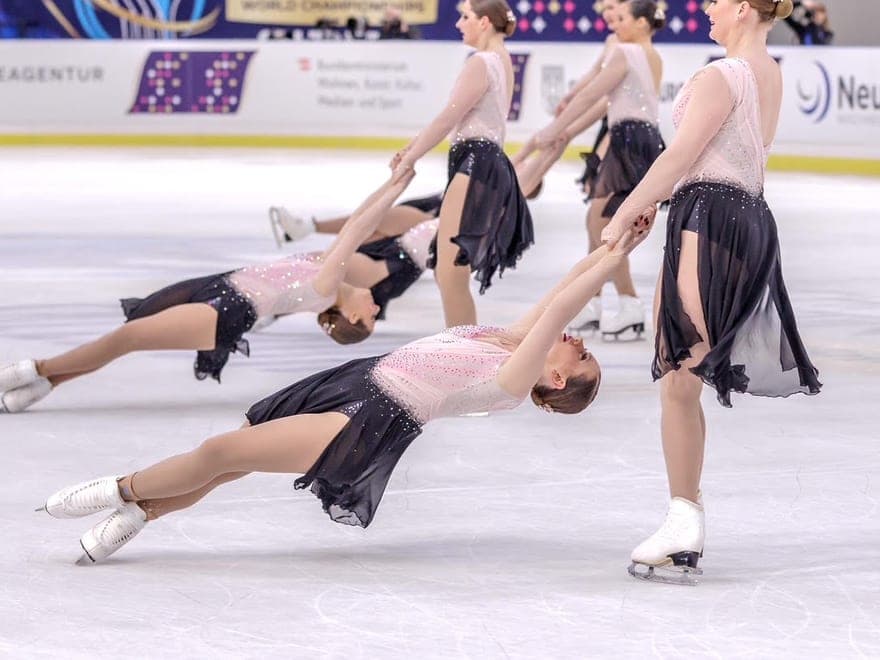
Pair Element
Skaters work in pairs, combining coordinated movement with partner skills and support.
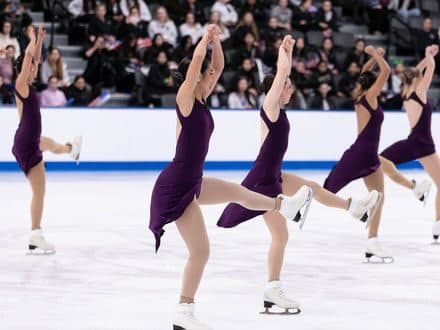
Twizzles
Skaters turn on one foot while traveling across the ice, matching the rotation and rhythm of their teammates.
A simple guide to scoring
Difficulty Matters.
So Does How It’s Skated.
Under the International Judging System (IJS), teams earn points for their elements and for the quality of the whole performance.
Technical Elements
The difficulty of the elements and how well the team executes them.
Program Components
Skating skills, composition and presentation across the performance.
Deductions
Points taken off for falls and other rule violations.
The segment score
When an event has both a short program and a free skate, their scores combine for the final total.
Does every level use the same scoring system?
No. Scoring systems and program requirements vary by event and level. Some introductory events use the Component Judging System (CJS), which evaluates the overall program rather than scoring each element separately.
Take the next step
Watch It. Meet Us.
Find Your Place.
There is a way into synchro whether you are curious about the sport, looking for a team or ready to get on the ice.
Come and watch.
Find a performance or event and experience the energy of a team moving together.
Explore the teams.
See the different places to begin and grow within Hayden Synchro.
Let’s talk skating.
Ask about getting started, team placement or the next opportunity to skate with us.